Monday, February 13, 2012

Round Two

Our break has ended, and a new term has begun. The department secretary will be posting our first term grades on Wednesday, at which point we'll be able to see who will need to come back in August to retake failed examinations or rewrite failed papers.

Most of the courses being offered this term are in a seminar format, which means both smaller class sizes and higher expectations for enrolled students. A difficult choice looms: I have room in my schedule for two seminars, but there are three relevant options:

  1. An intensive course on disgust. Fascinating and exciting material, taught by an intimidating (but wryly funny) professor who has leveled some very serious demands regarding course attendance and preparedness. I expect it'll be engaging and a lot of fun. The only question I have, the one preventing me from locking it in to my schedule, is: how relevant would this be for my thesis? 
  2. The Husserl Archives Seminar. This would probably be the most directly useful for my research, but it will also probably be the most dry and boring of the three. Might just have to bite the bullet and take it anyway, my apprehensions about reading large quantities of Husserl notwithstanding. 
  3. Wittgenstein's Philosophical Investigations. This class will meet for extended sessions once a month until the summer, and promises to dig deeply into the later work of Ludwig Wittgenstein. He's the original reason for my philosophical interest in language; I would love to deepen my acquaintance with him, but given his location in the canon (he has primarily been appreciated and appropriated within the analytic tradition in philosophy), this seminar would probably diverge the most widely from my current philosophical interests and research. 

As you can see, concern for the thesis provides this semester's dominant theme. Hopefully my research panic doesn't edge out my commitment to classes for this term; it will probably be important to come up with both a sense of boundaries and a regular work schedule in order to avoid dropping any of the various balls I'm going to try to juggle. 

Bonus round: here's a picture of me and roommate Dan at the Eiffel Tower just over two weeks ago: 

"Look, my cowlick is gone!"


Write us letters and emails; we are hardy boys but it is going to be a tough fight, and our souls are sensitive to the rain and the slush and the existentialism that apparently soak this town during the winter months. 

Wednesday, February 1, 2012

Wisława Szymborska, 1923-2012

I heard a guy say once that philosophers have the ability to become enduring companions, closer than close friends, for how much we allow them to speak into and give shape to our lives. This seems even more true of poets than philosophers, to chance a clean distinction (one that the poet I love dissolves, time and again). The most personal and deeply felt aspects of living in this world don't translate well into propositions, but in blessed moments, they may come to some kind of partial articulation—a fly-away instant of real meaning—through verse. Today I lost one of my companions, a Polish woman I never shook hands with, but whose words have been resonating in my mind and heart for years.

Wisława Szymborska is a poet I met between the brown covers of a book that someone had crammed into a low shelf at a used bookstore. Love hit me pretty hard, pretty fast. For the sake of brevity, I might call out a single theme in her work that's left a mark on me—namely, her reflections on time. Her poems frequently manage to bring out the radical uncertainty and contingency of human life, the speckdom of ours in a dark universe where eternity provides bookends for the whole of human civilization, while still holding on to a tiny thread of hope. That tiny thread was its own paradoxically ineffable argument, a tassel from the hem of Job's rent garments; the possibility of redemption in Szymborska's perspective still seems more solid and trustworthy than glib certainties in anyone else's.

What else could a clumsy writer say to honor a brilliant interpreter of human experience? She's been a beautiful and gracious companion to me since our first encounter years ago, and I look forward to many years of companionship still to come. God bless you, Mrs Szymborska. The world is better for your having been in it.


Portrait of the Artist as a Compassionate Human Being

Monday, January 30, 2012

Paris, in Brief

I never in my life thought it would be possible to feel the way I did standing underneath the Eiffel Tower. That's where the epiphany struck. In one of the world's great cities, with steel beams rising above my upturned face into a cloudless sky, I stood with an open mouth, like an idiot.

People wearing berets stepped around me, adjusting their fanny packs. I closed my eyes and felt the air on my face. The din of the square reminded me of something from my past; voices from without, inflected with a midwestern flatness, resonated with voices deep within. The jostling crowd, the excitement, the music; these held hidden ties to a single memory that teased me and danced in the periphery of my mind. I searched the insides of my eyelids for a clue.

One song ended and another began. What was that? Something loomed behind the excited cacophony of a thousand American conversations. I tilted an ear up at the girder-mounted speakers just in time for the tell-tale sign: an unmistakable, unredeemable, unforgivable twang. God help us, they're playing country music at the Eiffel Tower.

In a rush of associations, I snatched the memory out of the ether. The whole scene brought me back to the Allen County Fair. Country music, a buzzing midwestern crowd, and I swear those crepes were being dispensed out of carts just like the ones that sell fried elephant ears all over semi-rural Ohio, beneath the banked turns of frighteningly-temporary miniature roller coasters. If I shut out my view of the world's ultimate romantic destination, I was left to assemble a patchwork out of my other sensory feeds, and their data were as well-matched to a chilly morning at a fair in Ohio as anything I was presently experiencing. (The absence of the smell of manure only meant I was on the food-side of the fairgrounds, rather than the barn-side.)

And that's how I came to feel the impossible while standing under the Eiffel Tower in Paris, France. Surrounded by my jowly countrymen, in the presence of whom I pensively chewed a cosmopolitan meat stick, I closed my eyes and felt perfectly at home.

Tuesday, January 17, 2012

Lana Del Rey and the Locus of Criticism

My procrastination ought to make the most sense now, of all times, on account of this being exam week, with my next test slated for Friday afternoon. If a person has four wide-open days until his next objective, it's permissible for him to spend some of that time engrossed in extracurricular subjects, right? Which is my justification for the past 36 hours. Yesterday, after putting a period on the final line of a fifteen-page essay exam, I permitted my mind to fly off to whenever and wherever it wanted. To a noble place, my mind did not deliver me.

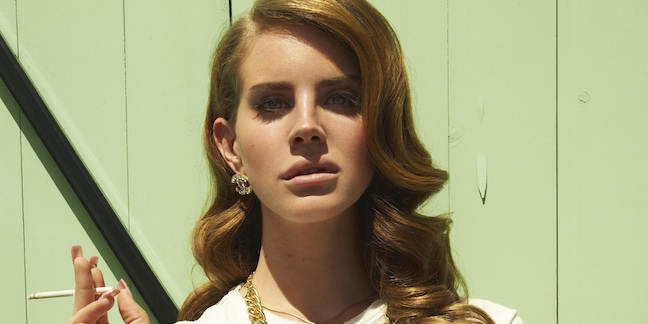
What are you looking at?

Lana Del Rey is probably a familiar name and face to you, if you waste your spare time scanning pop culture and music blogs. She has an EP out (I think?) and is releasing a full-length album at the end of January; she also performed on SNL last weekend and has been getting a ton of media attention, much of which has been negative (even angrily so). The elite, pace-setting members of the indie music scene have come down especially hard on Ms. Del Rey (a stage name), and while I can't speak to the musical criticisms qua musical criticisms, I do find the extra-musical complaints fairly compelling and accessible, because they are not very technical, and very human.

The thing is, 25-year-old Del Rey got her industry sea legs performing under her real name, Lizzy Grant, and when I say industry sea legs, I mean she stumbled between venues for a few years without gaining any real traction with the people who mattered. As competent but somewhat generic musicians are wont to do, she handily evaded commercial success.

But then Lizzy became Lana, and consequently went from being pretty in a cornfield blonde, wholesome, small-town-girl-next-door sort of way to being, well, something else. A collagen-puffed pout sealed her revamped market-ready image, which combines lapsed (and mourned) innocence with a caricaturish femme-fatale vibe and a lot of other things that make me feel weird when I watch her performing or giving interviews.

The Artist as Lizzy Grant, crowned Miss Iowa in another life

Music bloggers take real offense, it seems, because she is so clearly sculpted to appeal to denizens of their empire, the pop-indie scene. Her self-aware affectations imply a sort of wink-wink nod to something being parodied, or at least communicate the sort of po-mo playfulness that artists use to give listeners a sense of being in on something together, little cultural co-conspirators that we are. Her videos swing between whimsical and overblown images (Del Rey ensconced in a throne in what appears to be a cathedral, with tigers laying down on either side within arm's reach; Del Rey, bloodied, held in the arms of a muscular tattoo-covered dude with gauged ears, in front of the burning wreckage of their car—I don't see how you could interpret these as anything but self-aware, jokey excesses) and grainy Super 8 "found footage" style montages that evoke powerful nostalgia—even for the mid-2000s, apparently, judging from the inclusion (has to be another wink-wink moment, right?) of a familiar iPod billboard advertisement, nestled between shots of unhelmeted couples riding classic Victory motorcycles.

Even though I haven't the slightest critical chops to justify my saying anything about her music, I will say this: her tracks are, unsurprisingly, perfectly matched to the aesthetics of her persona and brand. The songs I've listened to cultivate a (self-consciously?) retro sensibility, with static-crackling samples of decades-old recordings, kitschy string intros, and moody lyrics that Del Rey delivers with a trademark croon. You may imagine it accurately with the aid of her promotional taglines, which she's apparently used to describe herself during interviews: "a gangster Nancy Sinatra," "Lolita got lost in the hood." As one online commentator points out, these sound a lot more like phrases that were tossed around in a corporate boardroom during a brainstorming session than anything a musician would say about herself off the cuff.

"Ha-ha! Americana, am I right?"

The thing is, though, all of this brand genealogy stuff seems pretty weak, insofar as it's intended as criticism. Successful musicians (perhaps with the exception of those who work exclusively in the studio) are necessarily successful performers—not only of their music, but of themselves—and creating a persona or brand is one way, perhaps the only way, of approaching performance: come up with a character to play, a simple and consumable identity that you can separate from yourself and offer as a commodity to potential listeners, fans, EP purchasers. Bring out a single theme that people can latch on to and associate with you; find an unexplored niche in the pop-cultural landscape and put your stake in the ground. It's one method among many for creating a splash, and I would go so far as to say that it's basically unrelated to the actual quality of the creative product.

But still, some artists leave us with a sense of having gone about this process of cultivating showmanship in a more "authentic" way; their onstage or video versions of themselves seem roughly natural extensions of the personalities we imagine them to exude around their families or their pets. Why does Lana Del Rey still leave such a bad taste in the mouths of so many? Do people really believe themselves to have such psychological insight and moral sensitivity in their assessments of the Del Rey persona's "truthfulness?" Is it just that people think she's a big phony, or could it have a little more to do with in-house resentment? Could it be the attention she's been receiving that other artists and a lot of critics feel is undeserved, based on her questionable talent and minuscule CV and blatant posturing?

Perhaps. But the market is obviously, always, and inherently unfair, and popular success is a cruel mistress to those who would try to court her. Del Rey set out to achieve something that she seems to have achieved, even if it's been a tough slog through bad performances and frequently caustic press that may have required her to give up something of herself. The brand she has constructed is essential to that success, and to call it what it is—manufactured—is to miss the point.

Ah yes, the point. The reason my brain keeps straining to make sense of Lana Del Rey is that frustratingly complicated aspect of her schtick that I mentioned earlier. The arch persona and intimations of irony do lead me to look for the joke, or the parody, or whatever it is that she's doing; I'm having a magnificently hard time trying to figure out the proper locus of criticism, the guiding intention that would establish a context in which her whole act might be evaluated, according to its own goals. I want to "get" the point, and am not content to believe that it's just to generate buzz.

Is it necessary for her to have the sort of determinate aim that I'm trying to uncover? Probably not, and maybe this reveals a weakness of my own in trying to understand music and musicians generally—an inability to be satisfied with a decidedly equivocal play of symbols designed to hazily evoke rather than communicate. Call it a preference; I have a greater appreciation for art that seems to ride a discernible (and criticizable) intention—for lyrics that tell stories, for instance—than art that forces its consumers to cast out feelers for shreds of meaning in purposefully jumbled and even inchoate sets of ideas and images.

Obviously there's a spectrum here, and I don't mean to be reductive, but man do I get annoyed with music and literature that isn't just obscure or difficult, but intentionally, a-priori meaningless in a cynical sort of way. Meet me halfway, creators; I love interpreting in the face of ambiguity and all its attendant tensions, and I find it bracing to bear up under the onslaught of tricks that subvert traditional artistic forms. But I hate finding out that I'm trying to make sense of something that was never meant to be more than packaged gibberish, a glossed-up sneer. Such stuff does exist, and it's angering.

Back to Del Rey. I have my theories. With the lips and the distant look, is she some sort of embodied critique of porny male sexual desire - a sendup of the appearance and attitude of a jaded longtime member of the adult film community, where the obvious artificiality implicates the viewer, as though to ask "is this what you want? A fleshed-out Barbie doll?" This could be the calculated side of a coin that flips to reveal the full-throated rage that characterized the Blood Brothers.

Or, with the grainy montage in "Video Games," is she a sad messenger angel from the past—a 60s flight attendant, somehow simultaneously from the 80s—who contrasts Morning in America in all its apparent sun-shiny resplendence with the grimness of present economic instability? Or, does the same angel sing over this montage only to show the fickleness of nostalgia and the impossibility of remembering rightly, who means to tell us that our idea of the past is a lie?

horsewoman of the apocalypse 

The pictured album cover weaves together the visual tropes intended to qualify Del Rey in the public imagination. The stark center-framing, combined with her blank look, 50s housewifey hairstyle, and closed collar, evokes all the creepiness of The Stepford Wives, the freaky suburban thriller/horror film that (SPOILER ALERT) climaxes with the protagonist making a terrifying discovery just before being implicitly murdered. What does she find out? That the women in her town are being systematically killed and replaced with robotic surrogates, chillingly cheery automatons that are perfect in the eyes of the town's male inhabitants—square-jawed breadwinners who would each, of course, like nothing more than to own a beautiful woman who doesn't talk back, puts out on demand, and has none of her own needs. 

The movie and the novel it's based on are satirical and intended to call out a sexist culture by hyperbolizing its inner logic of oppression. Does Del Rey present herself with a similar goal in mind? This is related to the first interpretation offered above, that of Del Rey as embodied critique of male heterosexual erotic fantasy. She could even be implicating a whole listless generation for its sins, if we take into account her song "Video Games," which laments a relationship that falters and fails because of a dude's inability to pull himself away from the wispy pleasures of his console. 

This is the most charitable reading of the mythos that is possible, I figure, and unfortunately, at the end of the day, it just doesn't seem to square up with the data. Del Rey is a meticulously refined product, designed to appeal to a certain audience, and any positive or productive take on her act seems superfluous to an essentially commercial core. Here's the insidious part though, given what I've just said: Lana Del Rey totally does meet you halfway, but not in any of the myriad constructive ways that serious art does. 

Here's what I mean. Lana Del Rey's intimations of irony and hidden, subversive meanings allow the listener to feel as though they're in on the joke—but one isn't being made. She ultimately seems to proffer one more version of the aforementioned postmodern playfulness that rewards quirky and whimsical musical acts with throngs of listeners. Rather than upholding an underlying, morally-superior reality, which gives irony its substance and its teeth as a tool for critique, Del Rey settles for aping the form without committing to a specified content. It's a well-trod path that recommends itself to creatives of all kinds who are trying to make a way for themselves in the lingering shadow of the fading "hipster" monolith. The result is the perpetuation of our on-hand cultural ideals of self-awareness and savvy detachment, but without positing a good worth pursuing within the aesthetic and spiritual context those ideals help to establish. 

One could take this even further, however. There is one way of understanding the anti-teleological posturing of Del Rey that ascribes to her a serious and deep artistic purpose, one that transcends and even subverts the designs of the executives who first came up with her name. Unfortunately for Lizzy Grant, it's a soul-threatening move: what if Lana Del Rey is a true metaphysical nihilist? 

If we take her pinched face and impossibly distant stare to a super-meta level, we might find an artist committed to showing everything to be a big fake mess. Not just fame, or commercial sexuality, or image-obsession, or a cynical music industry, but everything. Do the tigers in the deserted cathedral of the "Born to Die" video guard a faux-Nietzschean queen, crowned with relevance and wealth, offering herself as a stand-in for the sacred we no longer believe in—even dying as a martyr for this vision, her bloodstained figure a symbol of the ultimate sacrifice of oneself to one's pleasures, claiming for herself a pop-religion of smirking, tired, uncontested hedonism? We could be in on the joke after all, if the joke turns out to be the universe of human meaning. 

Could Lana Del Rey be so post-ironic as to actually intend her album title as an open question: is there something else to life, or are we really born to die? Could this question be the proper locus of criticism, the interrogation of value itself the ultimate goal? If so, could we perceive in Lana Del Rey a consummate creative force—an artist with the spiritual depth to stare deeply into the abyss, whose impassive gaze back at us reveals flickers of her grappling with that overwhelming darkness, which would threaten us all? 

Thursday, January 12, 2012

January is a Month for Exams

And papers. I'm 6,000 words deep, between the two that are due. If I can get them both done for tomorrow I'll have the weekend to study for my first exam, which is slated for Monday morning. It's as though the month of January is solely intended to remind you why some writer originally replaced a generic word connoting movement through time with "grinding." Grinding is an apt word to describe the sort of conveyance that it's gonna take to make it to February.

Anyway, during the past week I found out about two apps that I think are worth sharing. The first is called "Flux." Apparently your monitor produces light that mimics that of the sun, and it doesn't let up after the real sun sets, so your eyes don't get the rest they deserve while you're nocturnally devouring the internet. This app (thankfully free) corrects this problem by automatically raising the "color temperature" of your display at around the time the sun sets in your part of the world. It's pretty neat. To be honest, I have no idea if it's actually helpful or if I've just been duped by a lot of hype into thinking that it is, but in any case, here's the site where you can download it, or investigate it, or both. I figure it's worth trying. As a bonus, it works with OS X, Windows, and Linux! Hear that, nerd? Linux! Oh, and Apple's iOS... so you can get to sleep faster after finishing a game of Angry Birds between the sheets?*

the boss's kid messed up this cartoon yin-yang and the company logo was born

The second app requires a little more courage to plug, because to recommend it is to identify with the problem it is designed to mitigate. It's called "Freedom" and it lets you shut off your internet for a variable amount of time, anywhere between fifteen minutes and eight full hours. The interesting thing about Freedom is what it assumes about you, its user: namely, that you are incapable of working in a focused and disciplined way on your computer so long as your computer has a connection to the whooshing black hole that is the internet. Really, your willpower is so slight and your resolve so pathetic that you can't just unplug your ethernet cord or disable your wifi. You need something a little stronger—the firmness of a maternal authority, perhaps. You need Momma App to fly into a rage, pinch your ear and say "that's IT! NO MORE INTERNET for you! [...] umm, how long would you like me to keep you offline?"

It's an old-school sort of freedom they're talking about

And you know what? Yeah, I am that creature of pitiable resolve. Today, severed from the digital mothership as I was, I wrote some 2500 words in a six hour window. Yes, it was hard and tiresome and lonely and claustrophobic and dizzyingly scary just like every online junkie knows withdrawal will be, but at the end of the day, I'm thankful for how much crap I got done. I only wish Freedom wouldn't put you out for $10, but eh, someone else's discipline has to come at a price, I suppose. Here's the site. You can also download a free trial version with five uses, and the app is compatible with OS X and Windows Vista/XP/7/whatever.

I've written two longer pieces for this blog that I need to clear with other people before I put them up, but they're in the hopper at least. Not sure what else will go up here in the next few weeks, with all the tests and the papers and the endless sighing that dominate this month in my calendar, but who knows. Thanks for reading. As a bonus, here's a balloon sculpture commemorating a painting commemorating a couple that was well acquainted with old-school freedom and all its attendant zaniness:


"We don't play Angry Birds between the sheets!"*

__________________________________________

*Could this be the euphemism for sex that this generation has been waiting for? Not the euphemism we want, but perhaps - the euphemism we deserve? 

Saturday, December 24, 2011

Merry Christmas, Y'all

From me and my brother.

discovering shocking Christmas facts, probably


Jon is coughing like a someone with cat allergies who just realized he's been laying on the cat couch for the last hour and a half, and I'm tired, so it's bedtime. But we wish you all the best from a warm house in Holland, and hope that Santa doesn't make enough noise when he slips into your house for you to shoot him, because that would be a terrible reason to have your own wikipedia page. Merry Christmas! 

Thursday, December 8, 2011

Jean-Louis Chrétien on Prayer, First Installment

This is the first post in a series, which may itself be the first installment in a meta-series that I hope will accomplish two things. First, I hope it will help me to think through the thesis that I have begun sketching in short, panicked bursts; second, I hope it will be of some general benefit to anyone interested in the questions, problems, and thinkers associated with the "theological" sliver that has pricked phenomenology in recent decades. I also hope that it might be of even more general interest, specifically for anyone who has an abiding interest in the life of faith and its interaction with philosophy.

* * * 

The central text I'm using for my thesis (as I presently envision it) is "The Wounded Word: The Phenomenology of Prayer" by French philosopher Jean-Louis Chrétien. Posts that follow in the present series will comprise observations, riffs, and explications that refer to his text (the essay appears in the volume Phenomenology and the "Theological Turn": The French Debate, Fordham University Press, 2000).

This first installment attempts to locate Chrétien's analysis of prayer in its philosophical context. For a way "in" to what he's actually doing, it is helpful to remember that he is attempting a very specific sort of analysis, as the title indicates. Phenomenology examines the essences of things that appear from the perspective of those to whom those things appear - namely, human beings. Since this is the only perspective available to human beings, phenomenology was originally conceived as a movement that would provide a new (or restore an original) foundation for human thought, supplanting the rampant scientism that still persists with more than a century's remove from the publishing year of the phenomenological movement's founding text (Edmund Husserl's Logical Investigations, 1901).

The methodology used to produce phenomenological analyses requires a number of intellectual preparations. One of these we may informally refer to as "the reduction." (There are different reductions, but for our purposes we may refer to "the reduction" as a single thing to represent all of them.) The reduction entails a suspension of one's natural assumptions about the object of investigation, to the highest degree that it is possible; basically, a phenomenologist tries to put their prior beliefs about the object on hold while they carry out their analysis, so that aspects of the object might emerge in clarity that would otherwise be lost.

Sometimes this is a function of how utterly familiar the object, or an aspect of the object, is to the observer. For example, my own tongue is so familiar to me that unless I am provoked by the pain of a sore or the taste of a food I am eating, I am generally unconscious of it. The reduction is partially intended to overcome the sort of invisibility that an object like this acquires as a function of its nearness and familiarity. If one were conducting an analysis of taste or chewing, one would have to relearn to experience (or "see") one's tongue, so as to be able to throw light on the tongue's place in the phenomenon of taste or chewing. I should say that I am sorry if you are now thinking about your tongue.

The reduction also enables a person to reconsider everything associated with the phenomenon she is investigating, so as to come around to an understanding of its essence that is (to whatever degree possible) unencumbered by her assumptions. In the case of a pencil eraser, for example, bracketing my belief that pencil erasers are pink would allow me to reconsider my belief that pinkness is essential to pencil erasers (an assumption that is a product of my having only ever encountered pink pencil erasers). Completing the reduction, then, helps me toward a fresh realization: that the pinkness of the eraser in question is a contingent aspect of it, since there can be erasers of other colors that may be attached to pencils. This isn't exactly an epochal discovery, but hopefully it illustrates one of the benefits of phenomenology's reduction.

So, the reduction is important to phenomenological inquiry and helps to distinguish it from other modes of philosophical analysis. There are two ways in which this is significant for a phenomenological investigation of prayer:

  1. Dominique Janicaud, giving voice to the concerns of many contemporary phenomenologists, believes a phenomenology of religious phenomena to be impossible, because any analysis of this sort would require reference to the framework of religious beliefs that gives religious phenomena their sense; the phenomenological reduction would exclude these beliefs, therefore making a religious phenomenology impossible. Examining religious phenomena in a precise and insightful way is still an option on the table, Janicaud claims; it's just that that sort of analysis simply falls outside the proper purview of phenomenological inquiry, and belongs instead to hermeneutics or straight-up theology. But Chrétien and other philosophers like him are developing phenomenologies that they claim are accurate to the phenomena under description as well as to the project of phenomenology itself. Can prayer, an essentially religious phenomenon, be described without importing theology or metaphysics?
  2. Chrétien seeks to work within the strictures of phenomenology, even while developing an account of prayer that is informed by an array of theological sources. These sources are not so much a set of metaphysical or theological touchstones as a source of illumination for the lived experience of prayer; they throw light back out of their respective bodies of (bracketed) metaphysical and theological belief. The belief systems (or, I should say, the truth of the belief systems) that he borrows insights from are unimportant to Chrétien's analysis on the whole, and the analysis is built to work even after actual belief in God and transcendence has also been bracketed in the reduction. This means that Chrétien does not explicitly develop a theology, although the degree to which his work might be considered theological as opposed to purely phenomenological is still debated. 

(TL;DR) From the perspective of the reduction (numbers one and two above), first, Chrétien's analysis of prayer, if successful as a phenomenology, may be important for the practice of phenomenology generally; second, the type of analysis Chrétien is doing does not permit him to define the essence of prayer according to a particular theology, as would be the case in another context.

With these theoretical items in our handbag, we are almost ready to board the Chrétien prayer train. But first, there is still some further preparatory work concerning phenomenology. I'll save this for installment number two.