Here are the books I read in 2015. I'm happy to offer thoughts on any of these if you have any questions about them. Most of what's on this list I loved, although a handful of them I found deeply disappointing. (There are also a few I enjoyed but which left no lasting impression.) The last book I anticipate finishing in 2015 is Lucia Berlin's A Manual for Cleaning Women, which is a remarkable book.
Hold the Dark - William Giraldi
The Year of Magical Thinking - Joan Didion
Being Mortal - Atul Gawande
On Immunity - Eula Biss
Glimmerglass - Marly Youmans
This Side of Brightness - Colum McCann
The Remains of the Day - Kazuo Ishiguro
The Love Affairs of Nathaniel P. - Adelle Waldman
Man in Profile: Joseph Mitchell of the New Yorker - Thomas Kunkel
Hiroshima - John Hersey
On Violence - Hannah Arendt
Spiritual Friendship - Wesley Hill
Herzog - Saul Bellow
Bad Religion - Ross Douthat
Pilgrim at Tinker Creek - Annie Dillard
Radiant Truths - (Ed.) Jeff Sharlet
The Savage Detectives - Roberto Bolaño
Angels - Denis Johnson
Paradox in Chesterton - Hugh Kenner
Virtually Normal - Andrew Sullivan
St. Augustine: A Life - Garry Wills
Unapologetic - Francis Spufford
An Anxious Age: The Post-Protestant Ethic and the Spirit of America - Joseph Bottum
Água Viva - Clarice Lispector
For the Living and the Dead - Tomas Tranströmer
The Brothers Karamazov - Fyodor Dostoevsky
2666 - Roberto Bolaño
The Pocket Einstein - John and Mary Gribbin
Excellent Women - Barbara Pym
The Novel: A Biography - Michael Schmidt
Common Ground - Justin Trudeau
The New York Trilogy - Paul Auster
Strength of Conviction - Tom Mulcair
Brief Interviews with Hideous Men - David Foster Wallace
Love Undetectable: Notes on Friendship, Sex, and Survival - Andrew Sullivan
Citizen: An American Lyric - Claudia Rankine
The Mechanic Muse - Hugh Kenner
Eichmann in Jerusalem: A Report on the Banality of Evil - Hannah Arendt
Salvation on Sand Mountain: Snake Handling and Redemption in Southern Appalachia - Dennis Covington
Mine Eyes Have Seen the Glory: A Journey into the Evangelical Subculture in America - Randall Balmer
The Stories of Breece D'J Pancake - Breece D'J Pancake
Catholics - Brian Moore
Missing Women, Missing News: Covering Crisis in Vancouver's Downtown Eastside - David Hugill
Between the World and Me - Ta-Nehisi Coates
Paul Among the People: The Apostle Reinterpreted and Reimagined in His Own Time - Sarah Ruden
The Fire Next Time - James Baldwin
CivilWarLand in Bad Decline - George Saunders (reread)
Miss Lonelyhearts - Nathanael West
The Day of the Locust - Nathanael West
Invisible Man - Ralph Ellison
The Age of the Crisis of Man: Thought and Fiction in America, 1933-1973 - Mark Greif
After Theory - Terry Eagleton ( reread)
Snow White - Donald Barthelme
Against Interpretation and Other Essays - Susan Sontag
Things Fall Apart - Chinua Achebe
Happiness: Ten Years of n+1 - (Ed.) Keith Gessen, Mark Greif, Chad Harbach et al
MFA Vs. NYC: The Two Cultures of American Fiction - (Ed.) Chad Harbach
Illuminations - Walter Benjamin
The Enigma of Anger: Essays on a Sometimes Deadly Sin - Garrett Keizer
The Complete Cosmicomics - Italo Calvino
Amends - Eve Tushnet
Tuesday, December 29, 2015

Tuesday, November 10, 2015
Memories of Brett Foster
Brett Foster taught the first class I took at Wheaton
College: ENG 215 – Classical and Early British Literature, a 9:15 AM class I
stumbled into between 9:15 and 9:22 AM on Mondays, Wednesdays, and Fridays during
the fall of 2006. I remember writing a rakish poem about one of my roommates in
the style of Chaucer for an assignment. A couple days after we turned in our
poems, Brett read a few of them out loud, including mine. He praised my poem
until he reached the final couplet, at which point he criticized it for closing
with an awkward slant rhyme (“times”/”realized”) that basically torpedoed the
whole thing. I was elated.
His classes were highly interactive. The students who learned
the most came prepared to throw themselves into roiling, expansive conversations.
I was not yet a good student in those days and my preparation for Brett’s class
was consistently lackluster, but I was struck by Brett’s love for his subject,
as clear and instructive to us as his obvious expertise. He offered both light
and heat: a way of seeing, but also a way of living.
I didn’t take another literature class at Wheaton, falling
instead into philosophy, but Brett always remembered my name and greeted me
whenever we passed one another in the hallway.
We occasionally ran into each other at bookstores around
town. The Half-Price Books on Army Trail Road was a place we both favored for
its large selection. He was always eager to discuss recent finds with fellow
enthusiasts. I’ve seen few people demonstrate a joy as pure as his in the
discovery, collection, and endless reading of books.
He was generous in introducing me to his peers and
colleagues and inviting me into conversations at Calvin’s Festival of Faith and
Writing in 2014. I attended a session of his, a panel on translation that also
included John Wilson and Sarah Ruden, and got to listen to Brett dish on
Dante’s jealous contemporaries. We talked afterwards for a few minutes. He
reveled in the cheeky insults of the forgotten poets and further exposited some
of the cultural and social rivalries that fueled their disputes. When he really
got going, he turned his head and looked past me, smiling and nodding as he
talked. I skimmed along the surface of what he said, peering down at him miles
below as he bounced from idea to idea with joy.
In the spring of this year, I published an article about a
writer I love in a magazine I love, a magazine to which Brett has often
contributed. He emailed me after it was published to let me know that he
enjoyed the article and wanted to be kept apprised of my literary pursuits. It
was a short email: a small, good thing. It helped me to feel welcome—like I
belonged—and I don’t think I succeeded in articulating how much it meant to me
in the reply I sent him.
I didn’t know Brett well, but what I do know of him I am
confident to say. He was a lovely, generous, and brilliant man; he cared for many
people and expressed his care for them in tangible and specific ways; he was an
encouraging and patient teacher; he was a beautiful poet. I thank God for him.
Tuesday, September 8, 2015
A Holy Relics Compendium
Once upon a time, I wrote a weekly-ish column that was all about evangelical Christian cultural ephemera. I was very pleased with a number of the pieces, but my interests have led me away from the column for the time being, and I don't think I'm going to be able to bring it back in any regular form.
I would very much like to turn these pieces into a book someday, complete with beautiful photographs of small-town churches and the things one finds in them. I want to write a handful of final pieces in this vein, ones that I've been saving up, wherein I swing for the fences and try to muster all my powers to say something meaningful and interesting about the most central and common features of evangelical life. The book would be very pretty. A coffee-table book, maybe. I'd hope that it would be a gift for Christians looking for interesting things to say and think about their way of life at our peculiar point in history.
Till I can get someone interested in such a book, however, I'm left with the pieces I did write. They're all available online still, but haven't been easy to access from a central location. That's what this post is for.
Below, you can find links to all of the published installments of Holy Relics. I hope you enjoy these. I've also included links to guest pieces that friends wrote for the column in its last days; one of them is a good-natured parody by a very talented fellow writer for the site. I *loved* writing this column, and hopefully have many more pieces to write in this vein. When I get them published, I'll put up links to them on this page.
Thanks for your encouragement and support with this little project. Anyway, here're the links, arranged chronologically:
I would very much like to turn these pieces into a book someday, complete with beautiful photographs of small-town churches and the things one finds in them. I want to write a handful of final pieces in this vein, ones that I've been saving up, wherein I swing for the fences and try to muster all my powers to say something meaningful and interesting about the most central and common features of evangelical life. The book would be very pretty. A coffee-table book, maybe. I'd hope that it would be a gift for Christians looking for interesting things to say and think about their way of life at our peculiar point in history.
Till I can get someone interested in such a book, however, I'm left with the pieces I did write. They're all available online still, but haven't been easy to access from a central location. That's what this post is for.
Below, you can find links to all of the published installments of Holy Relics. I hope you enjoy these. I've also included links to guest pieces that friends wrote for the column in its last days; one of them is a good-natured parody by a very talented fellow writer for the site. I *loved* writing this column, and hopefully have many more pieces to write in this vein. When I get them published, I'll put up links to them on this page.
Thanks for your encouragement and support with this little project. Anyway, here're the links, arranged chronologically:
Sunday, April 26, 2015
March/April Writing Recap
In case you're interested, here are links to two recent pieces of mine that I'd love for you to read.
Germanwings and Evil is a meditation on the recent Germanwings tragedy and the privative nature of evil. It's short—a tangential riff on Terry Eagleton ended up getting cut during revisions—and much more direct than most of the stuff I write. It's also my first contribution to First Things' First Thoughts blog. Hopefully it will not be the last.
Who's Afraid of Shirley Jackson? is an article I worked on for quite a while, and I'm fairly pleased with the results. It can be found online via the link above, and you can also read it in the May/June print issue of Books & Culture. The piece traces a Freudian theme through Jackson's novels. If you've never read her or are only familiar with her legendary short story "The Lottery," I hope to convince you to pick up one of her longer pieces of fiction. They're dark, funny, and elegantly written.
Currently I'm also working on a review of Atul Gawande's excellent book Being Mortal, and should soon be posting a link to a review of William Giraldi's beautiful and propulsive thriller Hold the Dark. When those go up, I'll try to remember to post the links here.
Sunday, January 4, 2015
2014: Year in Reading
Unsorted, uncategorized, un-reflected upon, here's a list (as complete as my memory can make it out) of books I read in 2014, as well as books I'm currently reading and intend to finish. I have a lot to finish. If you want a snap opinion or recommendation for any of these, let me know!
Read:
Shirley Jackson - The Bird's Nest
—The Haunting of Hill House
—We Have Always Lived in the Castle
—The Sundial
James Baldwin - Another Country
Christopher Beha - Arts & Entertainments
Kyle Minor - Praying Drunk (my blurb)
Leslie Jamison - The Empathy Exams
H.P. Lovecraft - At the Mountains of Madness
Paul Elie - The Life You Save May Be Your Own
Shusaku Endo - Silence
George Saunders - Tenth of December
—In Persuasion Nation
Marilynne Robinson - When I Was a Child, I Read Books
David Foster Wallace - Both Flesh and Not
Christian Wiman - Once in the West (poems)
Penelope Fitzgerald - Human Voices
Mary Szybist - Incarnadine (poems)
John Darnielle - Wolf in White Van (my review)
Ernest Hemingway - A Moveable Feast
Denis Johnson - Jesus' Son (reread)
Christian Wiman - My Bright Abyss (reread)
Michael Chabon - Maps & Legends
Joseph Mitchell - My Ears Are Bent
—Joe Gould's Secret
Alexander Theroux - The Primary Colors
Cormac McCarthy - Blood Meridian
Judy Oppenheimer - Private Demons: The Life of Shirley Jackson
Jeff Sharlet - Sweet Heaven When I Die
Jacques Derrida - The Gift of Death
Gene Luen Yang - American Born Chinese
Aaron Belz - Plausible Worlds (poems) (my review)
In progress:
Michael Schmidt - The Novel: A Biography (my blurb)
Atul Gawande - Being Mortal: Medicine and What Matters in the End
Joan Didion - Slouching Towards Bethlehem
Roberto Bolaño - The Savage Detectives
—Between Parentheses
Gregory Wolfe (Ed.) - Bearing the Mystery: Twenty Years of IMAGE
Michel De Montaigne - The Complete Essays
Virginia Woolf - Mrs. Dalloway
Sarah Ruden - Paul Among the People: The Apostle Reinterpreted and Reimagined in His Own Time
Miguel de Unamuno - Three Exemplary Novels
Fred Sanders - The Deep Things of God: How the Trinity Changes Everything
David Bentley Hart - The Experience of God: Being, Consciousness, Bliss
—The Beauty of the Infinite: The Aesthetics of Christian Truth
John Cheever - The Stories of John Cheever
Felix Ó Murchadha - A Phenomenology of Christian Life: Glory and Night
Read:
Shirley Jackson - The Bird's Nest
—The Haunting of Hill House
—We Have Always Lived in the Castle
—The Sundial
James Baldwin - Another Country
Christopher Beha - Arts & Entertainments
Kyle Minor - Praying Drunk (my blurb)
Leslie Jamison - The Empathy Exams
H.P. Lovecraft - At the Mountains of Madness
Paul Elie - The Life You Save May Be Your Own
Shusaku Endo - Silence
George Saunders - Tenth of December
—In Persuasion Nation
Marilynne Robinson - When I Was a Child, I Read Books
David Foster Wallace - Both Flesh and Not
Christian Wiman - Once in the West (poems)
Penelope Fitzgerald - Human Voices
Mary Szybist - Incarnadine (poems)
John Darnielle - Wolf in White Van (my review)
Ernest Hemingway - A Moveable Feast
Denis Johnson - Jesus' Son (reread)
Christian Wiman - My Bright Abyss (reread)
Michael Chabon - Maps & Legends
Joseph Mitchell - My Ears Are Bent
—Joe Gould's Secret
Alexander Theroux - The Primary Colors
Cormac McCarthy - Blood Meridian
Judy Oppenheimer - Private Demons: The Life of Shirley Jackson
Jeff Sharlet - Sweet Heaven When I Die
Jacques Derrida - The Gift of Death
Gene Luen Yang - American Born Chinese
Aaron Belz - Plausible Worlds (poems) (my review)
In progress:
Michael Schmidt - The Novel: A Biography (my blurb)
Atul Gawande - Being Mortal: Medicine and What Matters in the End
Joan Didion - Slouching Towards Bethlehem
Roberto Bolaño - The Savage Detectives
—Between Parentheses
Gregory Wolfe (Ed.) - Bearing the Mystery: Twenty Years of IMAGE
Michel De Montaigne - The Complete Essays
Virginia Woolf - Mrs. Dalloway
Sarah Ruden - Paul Among the People: The Apostle Reinterpreted and Reimagined in His Own Time
Miguel de Unamuno - Three Exemplary Novels
Fred Sanders - The Deep Things of God: How the Trinity Changes Everything
David Bentley Hart - The Experience of God: Being, Consciousness, Bliss
—The Beauty of the Infinite: The Aesthetics of Christian Truth
John Cheever - The Stories of John Cheever
Felix Ó Murchadha - A Phenomenology of Christian Life: Glory and Night
Tuesday, July 22, 2014
A Broken Link to the Past: James Franco on Tom Bissell and Zelda
James Franco rarely bothers me anymore, but last night I saw a few paragraphs he put up at VICE about a 25-minute screen test he did for Blood Meridian some four years ago, and it made me angry. Blood Meridian is a beautiful and brutal book. I don't know whether it can make the jump to film. Someone with a creative vision on a level with McCarthy's own could, maybe, use it as source material to create something similarly disturbing and awe-inspiring for the screen, but that person is not James Franco. He's gone and done it anyway, though. Because he's James Franco, and he's made of money, and he can go and do anything he wants and then put whatever that is in front of an audience and they will watch it, or eat it, or read it, or do something else with it. Because he's James Franco.
In light of this I decided to post a thing I wrote about him a while back. This piece is at least a year and a few months old, and I wrote it in anger about one of the first installments of Franco's column at VICE. I've lightly edited it for clarity and what-have-you. Have at it:
In light of this I decided to post a thing I wrote about him a while back. This piece is at least a year and a few months old, and I wrote it in anger about one of the first installments of Franco's column at VICE. I've lightly edited it for clarity and what-have-you. Have at it:
Wednesday, April 2, 2014
Holy Relics: The Christian Flag, B-Side
Each week for Holy Relics, my column at Christ and Pop Culture, I analyze some bit of evangelical cultural ephemera. This week the Christian flag is on the docket. While my main piece is up at the site, I thought I'd use this space for this week's B-side: a series of surrealist vignettes.
I pledge allegiance to the flag of the United States of
America, and to Jesus Christ, its only Son, one state and three governmental
branches; I pledge that it was born of a virgin, suffered under the British
Parliament, was taxed without representation, was crucified, died, and was
subject to wanton quartering; on the fourth of July it was raised from its
shackles and now lives at the right hand of God; it is coming again in glory to
arm the living and burn the dead.

A bloodied Christ hops off the cross and punches a centurion
in
the face. He seizes a spear and then a white
garment from
the soldiers who were about to cast lots for it, and this garment he ties to
the upper third of the spear. Waving this improvised banner over his bruised visage, he looks into the
camera. “I want you,” Jesus says, “for the Lord’s Army.” Letting out a war cry,
he leaps into the air and is immediately upon the soldiers, whose eyes are
wide with terror at the Son of God in his strength.
The screen goes black as the VCR clicks and whirrs. “And
that, kids,” the Sunday school teacher says, “is where the Christian flag comes
from.” The children cheer and toss their chocolate Easter bunnies into the air
before rushing the enlistment table to become missionaries.
In the sanctuary down the hall a half-asleep man is in the
throes of a waking dream. The pastor’s rousing message has bypassed the level
of conscious thoughts to sink directly into his lizard brain. Visual flotsam
slides over his retinas and produces images of threatening shapes that loom
behind the pulpit. “Christ calls us to take up the cross,” Pastor Mark says
into his microphone, his helmet pushed back over his forehead, “and that the gates of hell shall not stand against his Church.” The roar of propellers drowns out his
voice. Smoke rises from empty choir seats. The rafters shake and dust falls all
around.
Behind the pastor, two flags loom. The somnambulist in the
pew has an eye on each and in the half-awake haze of his mind they combine into
a single one. “…the upward call of CHRIST” cuts through the noise, and the
dozing man jerks awake. Two flags stand again distinct.
“How would you design a Christian flag?” the youth pastor
asks the youth in the youth room. Hands go up,
suggestions are made. “Yes, that’s good. Fortunately, you guys, we already have
one that suits us just fine.” He reveals the flag, which had been standing
obscured behind a projector screen in front of a wall covered in brick
wallpaper. “The white is for Christ’s purity, the blue for baptism, and the red
for the blood shed on the cross, which is inside the blue box here. The white
is also for surrender. It’s a pretty neat flag if you ask me.” The brass cross
atop the flag pole gleams under the fluorescent tube lights.
“But who’s surrendering here?” Tim asks. “Are we surrendering? Is God? Is the Church? If our flag is next to the
American flag, is the Church surrendering to America? Shouldn’t it be a color
like green instead? You know, for life and growth and living things? But like,
what is a flag, anyway? A nationalistic totem? A military device with a very
specific rallying function? A symbol of a nation-state? Is it okay for the
Church to appropriate the visual language of nationalism, militarism, and
battle for the church? What about how the pledge to the Christian flag echoes
the pledge of allegiance? Also, why do they stand at the same height? What
about the interposition of a symbol between us and another symbol, which is the
cross itself? What’s wrong with that symbol? Why hasn’t someone nailed down the
exact dimensions for that canton?
Plus, like, why is it so dumb looking?” By the time Tim finishes asking
his questions everyone else has left, and he is alone with the back half of a
spray-painted Camaro and a Skillet poster.
“LOL what kind of idiot could believe that something comes
from nothing??? I’ll tell you what kind a DAWKINS KIND LOL. Please remember to
bring logic/reason to the logic/reason fight next time, Ath315t.” User COL.1.17 clicks
“post” and waits. Christ will be victorious on the internet, he thinks. Minutes
later his mouth forms a frown around a straw poking out of a Mountain Dew can
as he reads the first three replies to his comment. “These NYT types,” he says
to himself, spelling the acronym out loud, “they just don’t know when they’ve
been more than conquered.”
Christus Victor
marches across the world under a banner so large it unfurls across entire fronts
in the war with the powers of the world. This is by design; the better for his
soldiers to see his sign in the absence of himself. He holds a bright
sword aloft and rides out upon his white horse. The world will be overcome once more under the shadow of the cross-spangled banner. The legions of the Lord are
legion, and they are marching.
Saturday, August 24, 2013
Liberal Arts in the Woods
A fresh crop of undergraduates has matriculated at my alma mater, and for the past two weeks I guided a group of eight of them through an intensive transitional program set in the beautiful northern woods of Wisconsin. Eight bright-eyed dudes, laden with books and rumors of books and myriad anxieties, scrambling up a 12-ft wall under the benevolent gaze of me, their bearded leader, silently cheering for them.
We ate meatball subs and debated the proper shape of Christian witness in politics under canoes lashed to the ceiling of the dining hall. We pondered the unfathomable depths of the love of God on a pontoon boat, which 20 minutes of effort helped to anchor in the shallows near the lake's bank under a patchwork cover of pine tree shade. We talked about community sitting cross-legged in cool dirt, stood up to brush off our behinds and hike back to camp. As campfire smoke filled our jackets and fleeces we talked Dostoevsky, transubstantiation, metaphysics, and dating. I commented on academic paper formats and the school's language requirements while picking marshmallow out of my beard.
I helped to build the cabin they slept in. We built it lincoln-log style from some kind of kit one year when I went north for spring break to read and work. During the long winters, the snow muffles everything but the sound of the wind across the frozen lake. It is possible to build a fire in the middle of the ice, a couple hundred feet from the nearest shore. Standing in its glow, looking at a darkening forest above the buried banks while the sun goes down, it can feel as though you've reached the edge of the world—where eternity clips time, as Annie Dillard says.
In late summer, the sounds never stop. Bugs and outboard motors, shouts, rifle retorts, backfires, fireworks, campfire crackles, leaves rattling like a cascade of rice across a counter, deer suddenly bounding through the woods in front of you, birdcalls. It all floats on a light wind, the organic counterpoint to the mechanical city hum I've become accustomed to.
We walked over acres of forest and grass, turning over ideas and perspectives in the workshops of our souls and burning off extra energy in a steady chatter. Hymns sung next to a sputtering Hobart lifted the dishwashing room into the celestial spheres. Our puckered hands slung food waste and scrubbed baking sheets. The damp that spread through aprons into t-shirts was holy water. We may as well have been wearing robes and tonsures. God smiled upon us, likely in amusement.
Of course, you have to come back to earth sometime. Those students are about to begin their freshman year; our wonderful faculty advisor is already busy advising his new advisees. The engine is about to turn, and within a few weeks, Wisconsin will likely seem distant in history. That doesn't matter, though. What happened will prove its relative value over time. I'm just glad to have been a part of it, whatever it will mean in the long term. Embodied, thinking creatures that we are, I don't know of a better place to start a liberal arts education than in the woods along the banks of Long Lake.
We ate meatball subs and debated the proper shape of Christian witness in politics under canoes lashed to the ceiling of the dining hall. We pondered the unfathomable depths of the love of God on a pontoon boat, which 20 minutes of effort helped to anchor in the shallows near the lake's bank under a patchwork cover of pine tree shade. We talked about community sitting cross-legged in cool dirt, stood up to brush off our behinds and hike back to camp. As campfire smoke filled our jackets and fleeces we talked Dostoevsky, transubstantiation, metaphysics, and dating. I commented on academic paper formats and the school's language requirements while picking marshmallow out of my beard.
I helped to build the cabin they slept in. We built it lincoln-log style from some kind of kit one year when I went north for spring break to read and work. During the long winters, the snow muffles everything but the sound of the wind across the frozen lake. It is possible to build a fire in the middle of the ice, a couple hundred feet from the nearest shore. Standing in its glow, looking at a darkening forest above the buried banks while the sun goes down, it can feel as though you've reached the edge of the world—where eternity clips time, as Annie Dillard says.
In late summer, the sounds never stop. Bugs and outboard motors, shouts, rifle retorts, backfires, fireworks, campfire crackles, leaves rattling like a cascade of rice across a counter, deer suddenly bounding through the woods in front of you, birdcalls. It all floats on a light wind, the organic counterpoint to the mechanical city hum I've become accustomed to.
We walked over acres of forest and grass, turning over ideas and perspectives in the workshops of our souls and burning off extra energy in a steady chatter. Hymns sung next to a sputtering Hobart lifted the dishwashing room into the celestial spheres. Our puckered hands slung food waste and scrubbed baking sheets. The damp that spread through aprons into t-shirts was holy water. We may as well have been wearing robes and tonsures. God smiled upon us, likely in amusement.
Of course, you have to come back to earth sometime. Those students are about to begin their freshman year; our wonderful faculty advisor is already busy advising his new advisees. The engine is about to turn, and within a few weeks, Wisconsin will likely seem distant in history. That doesn't matter, though. What happened will prove its relative value over time. I'm just glad to have been a part of it, whatever it will mean in the long term. Embodied, thinking creatures that we are, I don't know of a better place to start a liberal arts education than in the woods along the banks of Long Lake.
Thursday, August 1, 2013
EXTRA, EXTRA
Hi all.
So in the interval since my last post, I got a new writing gig. I'll still be putting stuff up here whenever the mood strikes, but now you can also find stuff I write on a regular schedule over at Christ and Pop Culture, a repository of Christian cultural criticism.
The blog is a good one, and I'm pleased to be able to contribute content to it. So far, pieces of mine have gone up on Kanye's new album and Chabon's new novel. Check them out if you like! As always, thanks for reading.
So in the interval since my last post, I got a new writing gig. I'll still be putting stuff up here whenever the mood strikes, but now you can also find stuff I write on a regular schedule over at Christ and Pop Culture, a repository of Christian cultural criticism.
The blog is a good one, and I'm pleased to be able to contribute content to it. So far, pieces of mine have gone up on Kanye's new album and Chabon's new novel. Check them out if you like! As always, thanks for reading.
Monday, June 17, 2013
Recent Media Intake in Review: Cloud Atlas, Telegraph Avenue, &c.
Cloud Atlas
An enjoyable weaving-together of stories across space and time, Cloud Atlas is at its best when it's at its least message-y. Rarely have I felt so bombarded by a movie's thesis. The prosthesis-heavy makeup, 172-minute running time, and an enormously unfortunate use of dialect also threaten to scupper the film, but for me there is a saving grace in a clutch of deeply human stories.
The message, though, clangs around like a bolt in a steel drum. Ultimately, its ubiquity is matched by its simplicity: we are all connected, and our present actions will have consequences across future generations. In case you fail to hear it explicitly every few minutes in the dialogue, the Wachowskis decided to include a thorough exposition of the idea in a subversive broadcast late in the film. "From womb to tomb..." intones a central character into a microphone. As violence again bursts out in front of her, she delivers a speech to the world that sallies forth with all the rhetorical power of a few rejected Hallmark cards. The simple meagerness of the film's moral vision comes into a harsh light when this climactic piece of oratory is set alongside that of another film from a very different time.
From Cloud Atlas:
From The Great Dictator:
Sure, the comparison is unfair—The Great Dictator is unique in film history for the context of its creation, which is essential to its power and importance—but I also find it illuminating as far as it goes. The Wachowski's sentimental New Age-y spiritualism just doesn't fare too well next to Chaplin's urgent humanism. Make of it what you will. I enjoyed Cloud Atlas for its accomplishments with a complicated narrative, for several of its stories and its sheer ambition, but the transcendence it aims for seems to remain consistently out of reach.
An enjoyable weaving-together of stories across space and time, Cloud Atlas is at its best when it's at its least message-y. Rarely have I felt so bombarded by a movie's thesis. The prosthesis-heavy makeup, 172-minute running time, and an enormously unfortunate use of dialect also threaten to scupper the film, but for me there is a saving grace in a clutch of deeply human stories.
The message, though, clangs around like a bolt in a steel drum. Ultimately, its ubiquity is matched by its simplicity: we are all connected, and our present actions will have consequences across future generations. In case you fail to hear it explicitly every few minutes in the dialogue, the Wachowskis decided to include a thorough exposition of the idea in a subversive broadcast late in the film. "From womb to tomb..." intones a central character into a microphone. As violence again bursts out in front of her, she delivers a speech to the world that sallies forth with all the rhetorical power of a few rejected Hallmark cards. The simple meagerness of the film's moral vision comes into a harsh light when this climactic piece of oratory is set alongside that of another film from a very different time.
From Cloud Atlas:
Sure, the comparison is unfair—The Great Dictator is unique in film history for the context of its creation, which is essential to its power and importance—but I also find it illuminating as far as it goes. The Wachowski's sentimental New Age-y spiritualism just doesn't fare too well next to Chaplin's urgent humanism. Make of it what you will. I enjoyed Cloud Atlas for its accomplishments with a complicated narrative, for several of its stories and its sheer ambition, but the transcendence it aims for seems to remain consistently out of reach.
Monday, November 12, 2012
"Upper Middle Brow" and Suspicious Hermeneutics
I'm frustrated with a series of short cultural analyses I've read today. It all starts with an essay by William Deresiewicz entitled "Upper Middle Brow," in which the author attempts to identify a strand of culture-production designed to "make consciousness safe for the upper middle class" by "approving our feelings and reinforcing our prejudices." A step above "midcult" (a term I hate and thought had fallen out of fashion), "upper middle brow" consists of cultural products that possess "excellence, intelligence, and integrity," but that "always let us off the hook" by failing to disrupt our assumptions and challenge us. The "us" in question refers to a nearly-new creative class of college- and postgraduate-educated professionals whose tastes verge on the downright literary.
Who is implicated in this sophisticated, stylish, post-ironic pat-on-the-back party? Apparently: Jonathan Lethem, The New Yorker, Wes Anderson, This American Life, Lost in Translation, and GIRLS. Also, "the films that should have won the Oscars." But not all of them—a handy list of midcult artifacts ("peddling uplift in the guise of big ideas") includes Malick's Tree of Life. Who else is on the midcult list? Franzen, Jonathan Safran-Foer, Middlesex. (Just separating Lethem from this company seems a microscopically fine exercise in hairsplitting, and attenuates the explanatory power of the typology.)
So what does Deresiewicz suggest as an antidote? Upper middle brow is, after all, a problem framed in a way that implies a particular solution. The suggestion he offers is that we need a return to an art that will "disturb [our] self-delight", because we are "engorged on our own virtue" and allowed, by our choices of aesthetic consumption, to remain complacent and untroubled.
Who is implicated in this sophisticated, stylish, post-ironic pat-on-the-back party? Apparently: Jonathan Lethem, The New Yorker, Wes Anderson, This American Life, Lost in Translation, and GIRLS. Also, "the films that should have won the Oscars." But not all of them—a handy list of midcult artifacts ("peddling uplift in the guise of big ideas") includes Malick's Tree of Life. Who else is on the midcult list? Franzen, Jonathan Safran-Foer, Middlesex. (Just separating Lethem from this company seems a microscopically fine exercise in hairsplitting, and attenuates the explanatory power of the typology.)
So what does Deresiewicz suggest as an antidote? Upper middle brow is, after all, a problem framed in a way that implies a particular solution. The suggestion he offers is that we need a return to an art that will "disturb [our] self-delight", because we are "engorged on our own virtue" and allowed, by our choices of aesthetic consumption, to remain complacent and untroubled.
Friday, November 2, 2012
Hyperbole, in Good Faith
A friend of mine used to accuse me of falling into hyperbole when describing items of interest in my life. “No,” I swore, “I don’t mean to exaggerate, I’m giving you a true record of my experience—it was truly, superlatively [adjective]!” This little essay is an attempt to get at possible motivations for spending big words on little things, while also offering a hesitant typology.
Thursday, October 25, 2012
American Life, Redux
I am back—both in the States and on the blog. Seeing as I'm unemployed, I intend to return to semi-regular postings for supercurriculum. I hope you find it worthwhile!
The new apartment address—in case of parcels, visits, or otherwise—is:
Martyn Jones
2707 N. Kedzie Ave.
Unit 2
Chicago, IL 60647
USA
Thanks for reading, everyone. You're the greatest.
The new apartment address—in case of parcels, visits, or otherwise—is:
Martyn Jones
2707 N. Kedzie Ave.
Unit 2
Chicago, IL 60647
USA
Thanks for reading, everyone. You're the greatest.
Steaks on a Plane
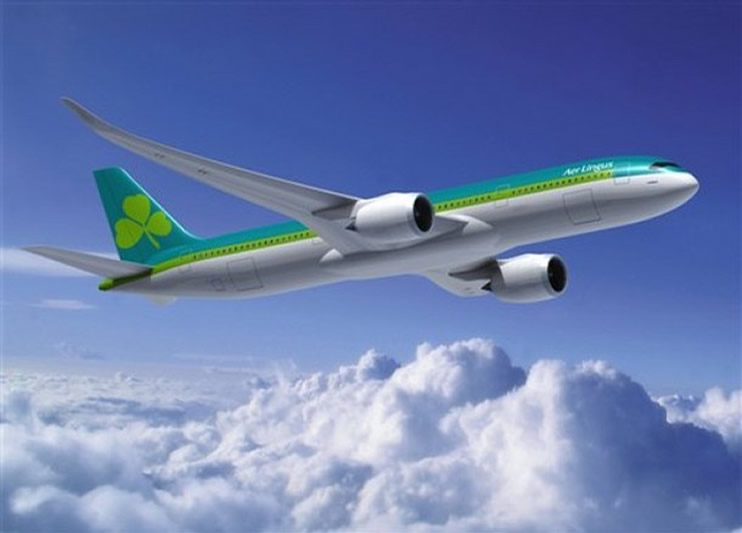
"Excuse me, sir, could I please see your boarding pass?"
I looked up from my laptop, instinctively tightening my feet around my bag and placing a hand on my rollaway. A woman in my airline's uniform with disarmingly large Persian eyes stood waiting for my response.
"Um, yeah sure, just a sec."
I handed it to her out of my shirt pocket, and waited to be told that I would need to go back to American Customs Pre-Clearance to sort out the ambiguities I'd inadvertently penned into my information card.
She eyed my ticket. "Please bear with me for a moment, sir." Then she walked away. I closed my computer, watched the desk under the sign for GATE 105, and thought about what a great story I'd have if I were detained in Dublin for the whole weekend by customs agents perplexed by my inconsistent passport use on flights to and from the US.
I ended up with a different story, however. My flight attendant returned and looked at me with her huge eyes. "Sorry about the confusion, sir. You'd gotten an upgrade and we wanted to make sure it was printed on your ticket." She handed me my boarding pass and I looked at it, then back up at her. "Wait a second—I'm sorry, what does this mean?" I must have misunderstood the word printed in place of "Economy" in the lower right corner, next to the almost-certainly misprinted "SEAT 3G". She replied, "It means you are now flying business class." She turned on her heel and walked away. I smiled, caught myself, furrowed my brow, and smiled again, unable to bury my excitement.
So it begins: the story of a wide-eyed midwestern boy's adventure behind the business class curtain.
Saturday, June 9, 2012
The Really Real and the Really, Truly, Indubitably Real
I went for a run today in the rain. By the time I got back to my building the sun had come out. With my contacts in, I was able to see a lot of detail in things that would otherwise be obscured by my glasses. I don't know if crumbled concrete and a rotting white door are proper objects of wonder, but here we are.
I was cooling down, walking and stretching, when my mind quietly seized. In the clouds and trees, even in the brick buildings and cobblestone parking lots, I saw a desert open up. Everything was a flat, consistent plane, each surface equally opaque and continuous with every other. There was a kind of inscrutable hiddenness in everything.
In this state I prayed. I asked God for a sign that this was his work. By the end of my silent prayer, everything had become a surface—not just the sights of things, but their sounds, smells, feels. My mind became a point suspended in something I know not what. I turned around like a baby in utero, looking at a world made strange.
I don't know if God answered my prayer in a way I could understand, but my heightened sense of alienation at least reopened a window that's been shut for a long time. Here's the view, familiar enough: my little brain does its best to dance over the surfaces of things, and is satisfied with a cursory knowledge of the contours they present to me. It cannot, however, open a door into a stone, or touch the life that animates an olive tree. My brain can only gesture at reality at a slant, and ponder it from a distance. Perhaps otherwise it would be consumed—or simply fall silent, like the collapsing body of the man who tried to steady the ark with his bare hand.
Maybe it really is true, that everything we think or say is essentially and most truly about what we cannot think and can never say. Who could know? And could she say it if she did know?
I was cooling down, walking and stretching, when my mind quietly seized. In the clouds and trees, even in the brick buildings and cobblestone parking lots, I saw a desert open up. Everything was a flat, consistent plane, each surface equally opaque and continuous with every other. There was a kind of inscrutable hiddenness in everything.
In this state I prayed. I asked God for a sign that this was his work. By the end of my silent prayer, everything had become a surface—not just the sights of things, but their sounds, smells, feels. My mind became a point suspended in something I know not what. I turned around like a baby in utero, looking at a world made strange.
I don't know if God answered my prayer in a way I could understand, but my heightened sense of alienation at least reopened a window that's been shut for a long time. Here's the view, familiar enough: my little brain does its best to dance over the surfaces of things, and is satisfied with a cursory knowledge of the contours they present to me. It cannot, however, open a door into a stone, or touch the life that animates an olive tree. My brain can only gesture at reality at a slant, and ponder it from a distance. Perhaps otherwise it would be consumed—or simply fall silent, like the collapsing body of the man who tried to steady the ark with his bare hand.
Maybe it really is true, that everything we think or say is essentially and most truly about what we cannot think and can never say. Who could know? And could she say it if she did know?
Saturday, June 2, 2012
Opa Leijs, 1924-2012
Yesterday I helped to lay my grandfather into the ground. We led the narrow pine casket over a gravel pathway, following a towering man in a waistcoat who gave us instructions in clear, formal diction at each stage of the procession to the plot where Opa was to be interred. After arriving there, we hoisted the coffin off its wheeled platform and placed it on a pair of steel wires that stretched over the grave. An attendant in a black suit pulled a long tool out of a hedge and pressed its end into the ground above the plot. The coffin descended, rocking gently on its cables. There was silence except for the wind and the whirr of the unseen lowering mechanism. Each family paid its respects and walked with crunching steps back to the main building.
Sunday, May 20, 2012
Crucible
Radio silence until June 1. The thesis and three papers are all due on May 29. May God have mercy on our souls.


the promise of June
Wednesday, May 9, 2012
One More Night in Leuven
In the afternoon, a surprise storm blasts Leuven with bizarrely-intense rainfall. I hear a rumble grow in our apartment and assume that a pot is coming to a boil on the stove. A sideways glance reveals roommate Dan in mid-reaction to something outside. I stand and look: water from the sky is roaring on the glass. The pot in the kitchen is drying on the rack.
I walk to an unlatched window that has blown open and the force of the storm astonishes me; I haven’t seen rain like this for a long time. Agitated and smiling, I superfluously yell down to a drenched bro running in the courtyard “run, bro!”, and this earns me a middle finger. The bro and I both laugh. He probably didn’t understand me. Twenty minutes later, a rainbow arcs out to the south; it looks as though it was painted on a photograph. Before I can take a second picture with Dan’s camera the color fades into the sky. My soul throws Dan's camera out the window in frustration before my physical hands return it to him.
Wednesday, April 18, 2012
Sci-Fi Thought Experiment
A kind of hominid on a planet like ours has evolved with a head that is tilted at a 90º angle, so that the chin of the skull fuses with the top of the chest; the survival of the species is miraculous and a result of an astoundingly high mean intelligence. Forward motion induces vertigo for these creatures' being unable to set their eyes on a point in the middle distance, as we do; they survived for ages in sheer cliff dwellings, are excellent climbers, and have developed a civilization that ingeniously accommodates their apparent biological deformity. Unable to look up at the sky or out at their larger surroundings without great difficulty, they have constructed enormous cities with tiny architectural footprints; these towers are built to resemble the cliffs that sheltered the species in the early days of its history.
To compensate with technology for the cruel genetic hand that nature somehow dealt them, these creatures have devised a video monitor system that affixes to their clothing with a special apparatus; it displays an image directly under the earth-pointed face of its wearer. The image is of the area directly in front of the creature, and so mimics what we understand to be normal human sight. Rapid forward motion, however—whether from running or piloting a vehicle—is experienced as psychically akin to falling, because falling is the only visual analogue available to them for it. Genetic memory therefore makes long-distance travel terrifying, and the new technology has inspired a genre of fiction that mythologizes horizontal motion, and plumbs the psychological depths of the minds of those so unfortunate as to undergo it. In these works, which are intelligible to us as poetry, a full-speed run may tear a rip in the fabric of reality, and pilots spontaneously catch fire, and walking around on the ground outside a village may cause it to collapse into a sudden abyss. Speed as such is a cultural wellspring of dread and provides a context in which daring and fear alike are made manifest.
To compensate with technology for the cruel genetic hand that nature somehow dealt them, these creatures have devised a video monitor system that affixes to their clothing with a special apparatus; it displays an image directly under the earth-pointed face of its wearer. The image is of the area directly in front of the creature, and so mimics what we understand to be normal human sight. Rapid forward motion, however—whether from running or piloting a vehicle—is experienced as psychically akin to falling, because falling is the only visual analogue available to them for it. Genetic memory therefore makes long-distance travel terrifying, and the new technology has inspired a genre of fiction that mythologizes horizontal motion, and plumbs the psychological depths of the minds of those so unfortunate as to undergo it. In these works, which are intelligible to us as poetry, a full-speed run may tear a rip in the fabric of reality, and pilots spontaneously catch fire, and walking around on the ground outside a village may cause it to collapse into a sudden abyss. Speed as such is a cultural wellspring of dread and provides a context in which daring and fear alike are made manifest.
Tuesday, April 10, 2012
East Berlin
My sister's apartment is two blocks from where the wall once stood. To memorialize it, they've put up a long row of steel framing poles that replicates its original interior scaffolding. The architectural differences between the city's two halves remain, in spite of almost a quarter-century's worth of colorful renovations on both sides. My sister is taking the day off work tomorrow in order to show us around. I look forward to expanding my acquaintance with Berlin beyond the insides of a couple of apartments and trams.
To get here we rode a long-distance train—no private compartment for us, though; in a show of solidarity we opted for "proletariat class" seating, and were even blessed with access to the bar car for our good-faith gesture. Prices were a little steep for our humble tastes, I should say. Without major nourishment but also without major exertion, we passed the time by reading and playing cards. The fields that rolled by us were beautiful, full of cows and small brick houses that faded into the evening until we could only see our own bright reflections in the window. During the ride I finished Self-Consciousness: Memoirs by Updike, and thought a lot about death.
Rewinding further, my aunt's house was delightful during our weeklong visit. I bled out around five thousand words for my thesis, visited Amsterdam, and spent a lot of time drinking tea while staring out the window at falling rain in the garden. The town of Bussum, where my aunt lives, is stylish and small, allotting a generous (by European standards) plot of land to each freestanding house; most conform to the aesthetic of traditional Dutch architecture, orange roof tiling and all. In the afternoons we would eat cheese cubes off a wooden board and sip wine in anticipation of an hours-long wait for dinner, usually served at 10pm. A good vacation rhythm until Easter ushered us out. The tomb is empty; my aunt's house is also no longer full.
On Saturday Jeremy and I will be returning to Belgium and a frantic race to the end of our program. Strange to think that I'll be back in the states in less than three months. Time flies.
To get here we rode a long-distance train—no private compartment for us, though; in a show of solidarity we opted for "proletariat class" seating, and were even blessed with access to the bar car for our good-faith gesture. Prices were a little steep for our humble tastes, I should say. Without major nourishment but also without major exertion, we passed the time by reading and playing cards. The fields that rolled by us were beautiful, full of cows and small brick houses that faded into the evening until we could only see our own bright reflections in the window. During the ride I finished Self-Consciousness: Memoirs by Updike, and thought a lot about death.
Rewinding further, my aunt's house was delightful during our weeklong visit. I bled out around five thousand words for my thesis, visited Amsterdam, and spent a lot of time drinking tea while staring out the window at falling rain in the garden. The town of Bussum, where my aunt lives, is stylish and small, allotting a generous (by European standards) plot of land to each freestanding house; most conform to the aesthetic of traditional Dutch architecture, orange roof tiling and all. In the afternoons we would eat cheese cubes off a wooden board and sip wine in anticipation of an hours-long wait for dinner, usually served at 10pm. A good vacation rhythm until Easter ushered us out. The tomb is empty; my aunt's house is also no longer full.
On Saturday Jeremy and I will be returning to Belgium and a frantic race to the end of our program. Strange to think that I'll be back in the states in less than three months. Time flies.
Subscribe to:
Posts (Atom)